
Bamboo Bondage - Anchoring a pole to your partner
By Lazarus Redmayne
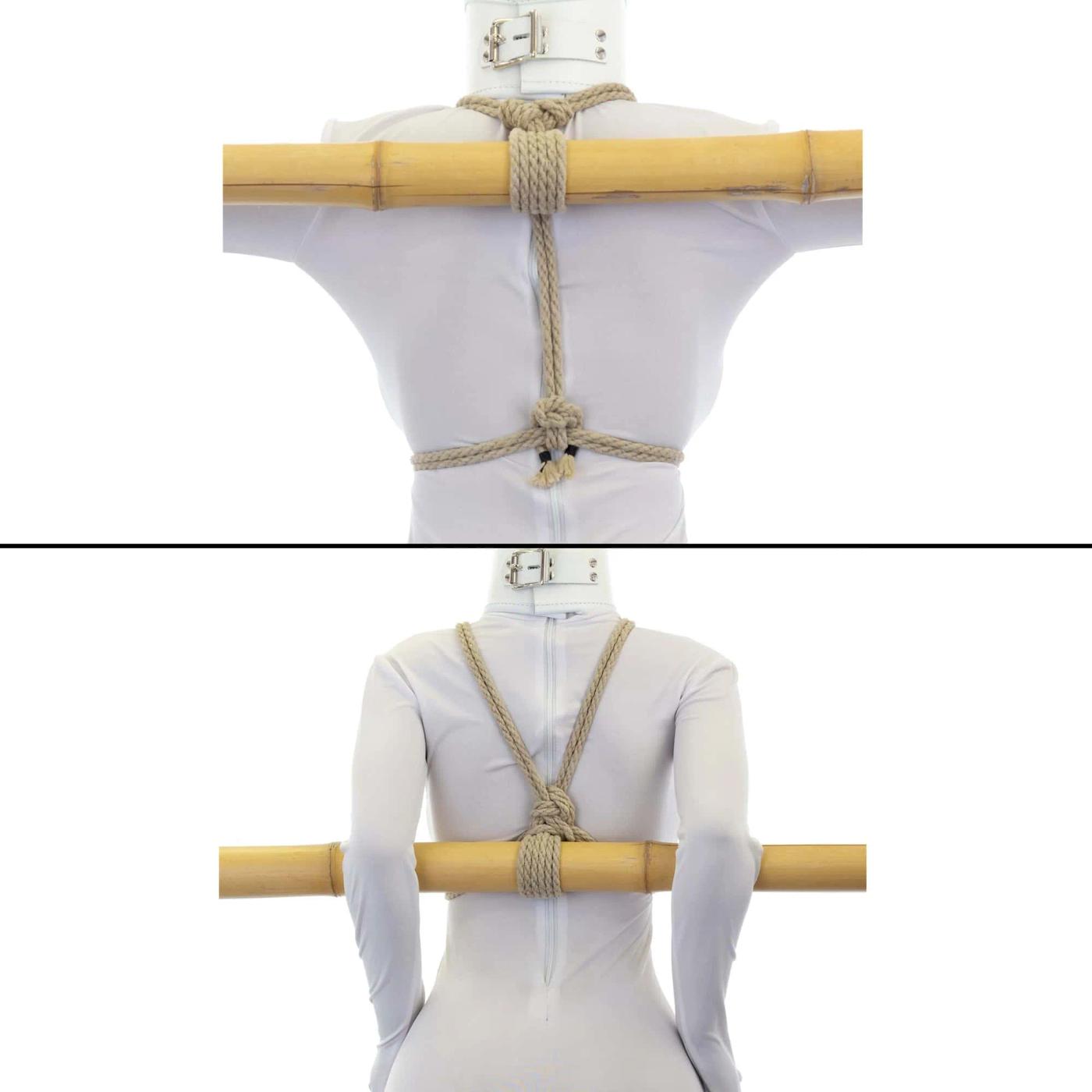
Anchoring a Pole To Your Partner
A game of balance, strategy, and a bit of agility, one of the most common challenges we face involves a slippery partner attempting to escape the carefully crafted structure by dislodging the pole. Their ability to press the end of the bō against something solid could potentially shift it out of place, unraveling the intricate pattern you'd spent so much time creating. Oh, the sheer tenacity of our beloved partners in this playful escapade, simulating the determination of the most cunning of eels!
It is here where the concept of "anchoring a pole" becomes significantly important and is, most certainly, a game-changer. Anchoring – as the term implies – refers to the act of firmly securing something to ensure stability. In this context, it denotes the practice of securely fastening the rod to your partner to maintain the entire setup's stability, even amidst the most vigorous squirming or strategic maneuvers. The beauty of anchoring lies in its ability to convert a potentially slippery situation into a solid success story!
Just imagine the scenario. You’re engaged in a playful, spirited challenge with your partner, both of you intent on outsmarting the other. The excitement is in the air. The contest begins, and your partner tries to wriggle their way out of the structure you've so painstakingly built around them. Their determination is commendable indeed! But here's where you reveal your secret weapon - the art of anchoring a pole. You secure the pole firmly so no matter how much your partner squirms or pushes, it's not going anywhere.
This simple yet effective technique accomplishes more than just ensuring the stability of your setup. If you think about it, anchoring a pole also enhances the safety of the activity. It prevents the pole from moving unpredictably, potentially causing injury or damage. Safety isn't just a guideline; it's a necessity that amplifies the fun and excitement of the game without any lurking fears of mishaps.
But there's more to the act of anchoring a pole than stability and safety. It also preserves the integrity of your design. By anchoring the pole securely, you ensure that your intricate design - a product of your creative genius - remains intact for maximum fun and creativity. It’s like creating a piece of art; every brush stroke, every color choice, contributes to the overall picture. In the same way, the way you manipulate and secure the pole adds significantly to the final result of your shared playful endeavor.
In conclusion, the art of anchoring a pole elevates your playful interactions with your partner to a whole new level – it adds an element of strategy, enhances safety, and preserves your creative output. So, the next time you find yourself in a slippery situation, remember the power of anchoring a pole. Embrace it as a tool for turning potential chaos into an organized, creative, and fun-filled experience. Anchoring a pole is indeed a proactive step towards ensuring a solid and successful playful encounter, emphasizing the saying - it's not just about the game, but also how you play it!
If your planning on anchoring a pole to your partner, you should already know the following ties:
Prerequisites

Video
Anchoring a pole to the shoulders
Our goal is to have our partner’s arms tied out to a pole across their shoulders.
So we want a pole to be here. But…
We want ensure our partner can’t wriggle free by working the pole (cough) off in one direction or the other, thus freeing their hands.
One great way to do this is to anchor the pole in place by using a Prusik Anchor [A②] and then attaching that anchor to our partner with a harness. Here is how to harness it up at the shoulder level
Hold the pole so that the Prusik is in positioned where you want it, then run the tail over the shoulder to the front
The pole may dangle a bit for a moment, and that is OK, but don’t let the pole pull any rope backward. Run the tail across the chest diagonally.
To the other side …
… and around the back. Then reach under the center line to grab the tail
Let‘s lock this off with an X-friction
Pull through and down
Reverse the tension
Reach under the incoming line and grab the tail
Pull tail up behind and all the way through, then pull it down in front again
Now reach behind the knot from the other side and grab the tail
Pull the tail through and up…
…running it across the chest to the other shoulder
Run it over the shoulder to the back
(Here you can see that the pole is temporarily out of position while we have been building the harness)
Run the tail under the line coming out of the Prusik
It is important that you only tie off to the line coming out of the Prusik. Not the Prusik itself, nor to the pole. This will ensure that the Prusik acts as intended and locks the pole in place.
Reverse the tension, pulling the pole back into position
Run the tail under the incoming line
Reverse tension upward
Then run the line under the knot. If you are out of rope, you can lock off here. If you have rope left, you can run it under the knot and under the pole, down along the spine
Run it under the chest band
Tie off with a Square Knot or Half-Hitches
Tuck ends under
Anchoring a pole to the middle of the back
This position can be alluring, can offer great control over our partner and give them an amazing feeling of helplessness
So we want a pole to be here. But we want ensure our partner can’t wriggle free by working the pole off in one direction or the other, thus freeing their elbows
One great way to do this is to anchor the pole in place by using a Prusik Anchor [A②] and then attaching that anchor to our partner with a harness. Here is how to harness it at the small of the back
Tie the Prusik in the middle of the pole and place at the small of the back
Hold the pole in place while you run the rope around your partner’s chest…
…then back around and then up under the line coming out of the Prusik
It is important that you only tie off to the line coming out of the Prusik. Not the Prusik itself, nor to the pole. This will ensure that the Prusik acts as intended and locks the pole in place.
Run the line up over the shoulder to the front and lay it on top of the chest line
Reach under the chest line from the same side as the shoulder. Grab the tail
Pull the tail up and through, then run it to the opposite shoulder. A small decorative twist will form
Bring the rope over the shoulder and on top of the chest line on the opposite side. Then reach under the chest line to grab the tail
Pull it through and up
Lock it off by laying your fingers on top of the tail and then running them under the center line, then feeding the tail to those fingers
Pull through to form a half-hitch
If you have more rope weave it back and forth between the shoulder straps to use it up. If not, just tuck the ends under
Now the pole is anchored in place and you can position your partner for the next phase of the tie.