
Emergency Release - Cutting Rope
You always need to be prepared to get someone out of rope instantly, if needed. This means having some means of cutting the rope in your pocket, or on your belt, or another place immediately within reach.
Important: There are many ways to plan ahead and avoid getting into a situation where you might need to cut the rope, including:
- Playing within your skill level and the skill level of your partner.
- Negotiating well.
- Making sure all your physical and medical needs are met before playing.
- Building experience with a person over time, starting easy and building to the more challenging or complex things once you are both more comfortable with each other.
- Using techniques that allow for quick releaseQuick releaseA knot, wrap, or tie-off built so that a single pull frees the rope, giving a fast way out if a scene needs to end quickly. It is common in bed and floor ties as a safety measure, but it trades some holding security for speed and can loosen unexpectedly, so many riggers keep shears within reach even when using one.Quick Releases - Building in 'Outs' if putting someone in a challenging position or one with a higher risk of nerve compressionNerve compressionPressure on a nerve, most often from a rope band lying directly across it, that disrupts the signals it carries. The warning signs are usually tingling, numbness, or weakness rather than pain, so a nerve issue can be easy to overlook; the standard response is to move or remove the wrap right away, since compression left in place can cause injury that takes weeks to heal.Nerve CompressionNerves of the Arms & Hands - Sensory & Motor Tests for Nerve Compression. One great quick release technique is to use a Slipped Somerville Bowline.
- Using shorter ropes to give you more options or “outs” in emergencies.
If you follow and practice these guidelines and other safety concepts in this book, you will be less likely to get into a situation where you need to cut a rope. You can build the skills and experience to quickly and calmly untie a person. This is usually better unless the situation is an emergency.
The key to maintaining control over rope is tension. Once a blade of any kind cuts through your rope, you do not have control over the tension and you do not have control over your rope. In some cases, maintaining control matters less than removing the rope as quickly as possible. However, by being diligent with negotiationNegotiationThe conversation partners have before a scene to agree on what will and won't happen, covering activities, limits, safewords, health or injury concerns, and what each person hopes to get from it. It turns assumptions into shared, informed consent, and is worth revisiting whenever the partners, the plan, or someone's comfort level changes.Moving from Vetting to Negotiation, communication, and building in “outs”, you can save yourself from having to cut rope in most cases — and you can maintain control over the rope and the sceneSceneA single, bounded session of rope or BDSM play, with a clear beginning and end that partners step into and out of together. Its shape and edges are set during negotiation, and once a scene winds down, aftercare begins. A general BDSM concept rather than something specific to rope.Finding the Local "Scene" or "Community"Overview.
But emergency situations can and will still happen, no matter how good you are or how well you prepare!
Despite best efforts, a medical emergency may arise. An accident of some type can occur. The bottom may have a panic attack. The fire alarm may go off. A nosey neighbor or relative might knock on your door. There are many situations that may require that you are able to quickly release your partner.
If it is an emergency, do not hesitate. Act quickly. Assess the situation and get them free as quickly as you can safely do so. If that means holding their weight while you or a bystander cuts the rope — do it.
When in doubt, cut them out.
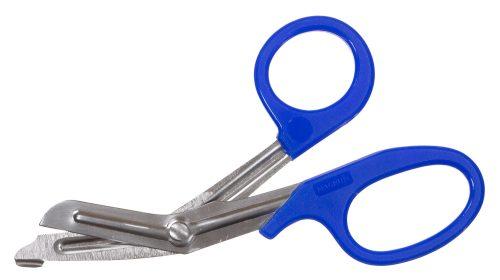
Always have a tool within reach to quickly and safely cut rope! I personally always have EMT shearsEMT shearsBlunt-tipped trauma scissors, originally made for emergency medical use, kept within reach during rope scenes so someone can be cut free quickly if needed. The rounded lower tip slides under taut rope against the skin without cutting the person, and the strong blades handle most rope, which makes them a standard part of a safety kit. Also called trauma or paramedic shears. in my bag and put them right beside me or in my back pocket when I am rigging, but I also have a backup rescue hook on my belt. The situation will dictate which one I reach for.
Recommended — High quality, heavy-duty emergency EMT shears are the most reliable, lowest risk option for most people. They are designed to cut seatbelts, leather boots, and more in an emergency. Their shape and blunted tips are important features that reduce risk when being used. However, they are bulkier than rescue hooks (below) and may be difficult to use in some positions. Be wary of cheap ones that dull quickly, or be prepared to replace them after a few uses.
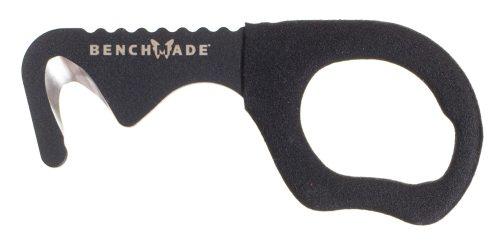
Also good, but with risks — Rescue Hooks. These are fast and nimble. I personally wear one on my belt at all times. It is important to understand that they work well when rope is under tension, but not as well if the rope is slack. You may need to add tension to the rope in some cases to help them cut. Also, there have been cases of people using them incorrectly and causing a secondary injury. If you choose this option, research how to use them properly and practice doing so.
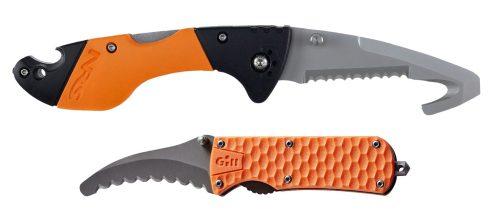
Not recommended, but used sometimes — Knives. Some people use knives, but we recommend against this. These are among the highest risk options. It is far easier to slip and make a bad situation worse when using a knife. If you insist on using one, at lease choose a “rescue knife” that has a blade only on one side AND has a squared off or blunted tip.
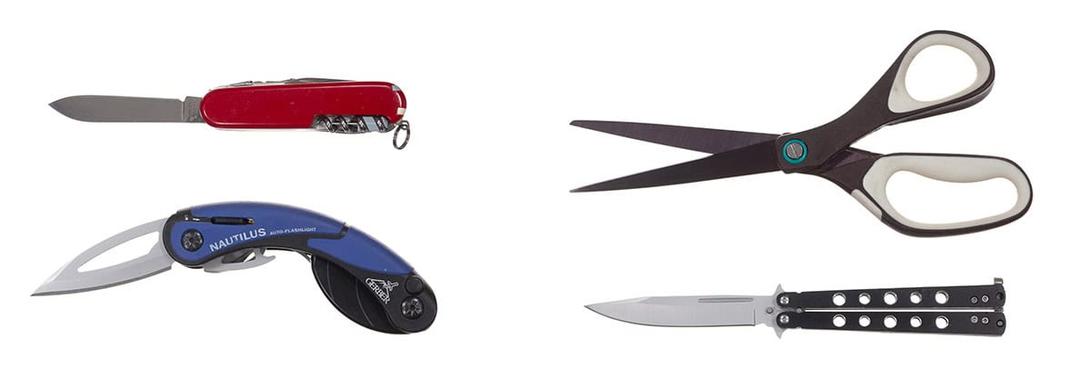
Do not use tools that are not designed for emergency use near a human. Anything with a sharp tip or with a blade on both sides—standard scissors or knives, for example—should not be used in an emergency. Anything that look anything like these is highly dangerous in an emergency situation:
Practice Cutting Rope
It is very important to practice cutting rope. Sacrifice a piece of rope and test out how it cuts with your chosen cutting tool. Try cutting it under tension and when slack, try cutting a bundle of ropes as well as just a single strand.
- Does your tool cut cleanly and quickly?
- How hard is it to cut?
- How long does it take?
- Do you have to “chew” at the ropes with it, or have to make multiple passes?
If you get anything other than a smooth, clean, controlled cut, choose another tool.