
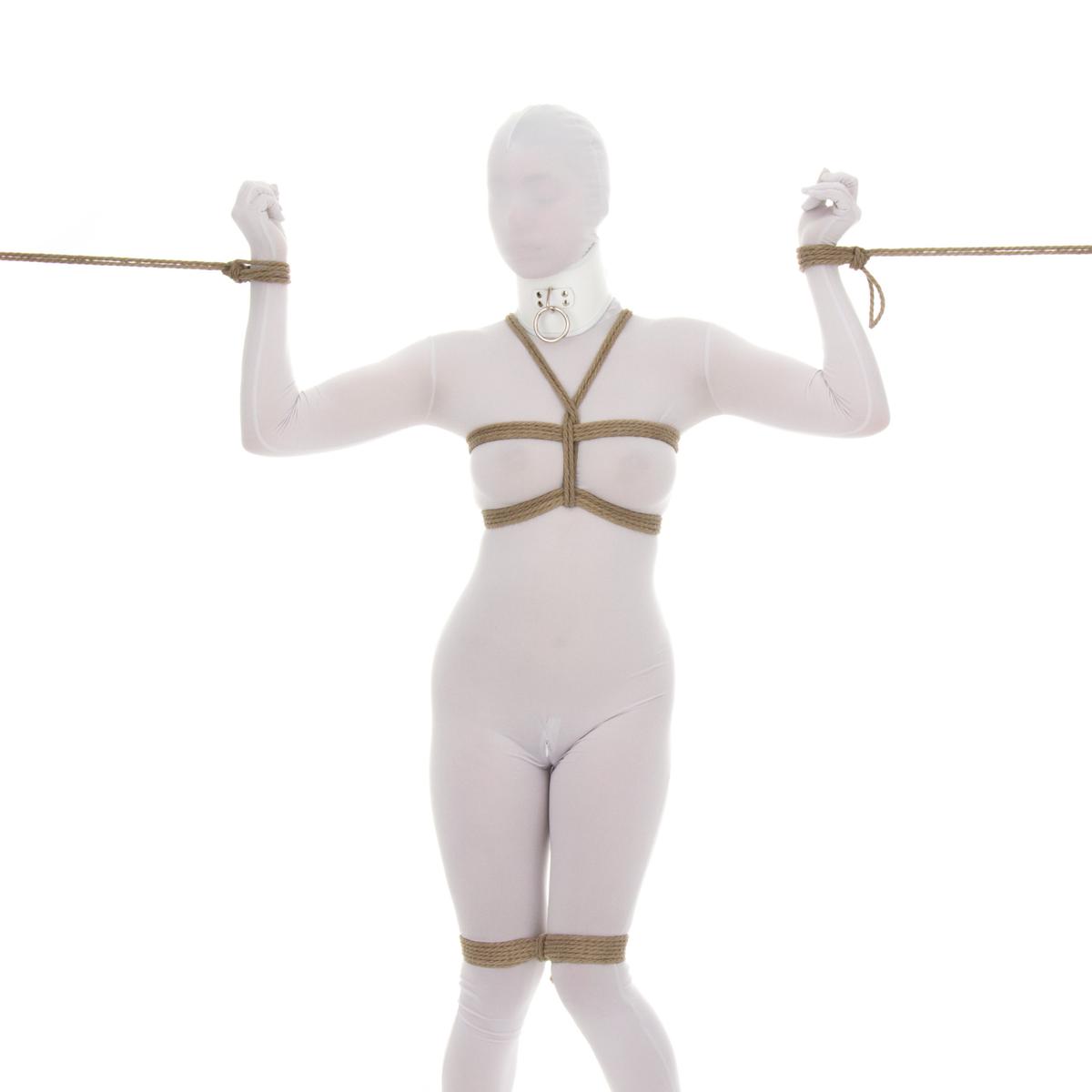
Foundations of Rope Bondage (Class)
An instructor resource intended for those teaching an introductory class on Rope Bondage
This page provides the links to the tutorials referenced in the "Foundations of Rope Bondage" class. If you don't want to juggle a phone while practicing or might be somewhere with a poor connection, check out our 427-page Foundations of Rope Bondage book!
"Foundations of Rope Bondage" class is a hands-on skills-development class. It covers much of the same material as the Rope 101 in-person class, but is more streamlined -- each concept directly builds on the one before it. This makes the class faster and allows people to practice core concepts multiple times.
All the techniques in this class are available for free on TheDuchy.com, so your students will have something to refer to after the class. You are free to use this material just as it is or modify it to fit your needs under the CC4-Attribution-Sharealike license.
A note about rope: I do not yet sell rope, I do however have a referral relationship with several great suppliers. If you go through my site to buy from them, we get a small percentage of the purchase as a referral fee, which is very helpful to us! Go to the Buy Rope! page for the latest!
- Safety & Negotiation information is provided throughout the class, as are various elements of rope handling & style .
- The 4 fundamental knots:
- Overhand Knot - A simple stopper knot, useful at the end of ropes
- Half-Hitch - Basically an Overhand KnotOverhand knotThe most basic knot, made by forming a loop and passing one end through it. It serves both as a simple stopper and as the first move in building more complex knots. Drawn tight in thin rope it can be stubborn to undo, so it is used sparingly where a tie needs to come apart quickly.Overhand Knots but another line or lines, useful for locking off straps and ties
- Lark's Head - A simple collapsing loop that, when combined with the Half-HitchHalf-hitchThe simplest hitch: a single turn of rope passed around an object with the working end tucked under its own standing part to hold it. On its own it is not very secure, but stacked or combined with other elements it forms the backbone of many larger ties.Half-Hitches is the basis for many ties
- Square Knot - One classic way to connect the ends of two ropes together, useful for extending rope or locking off a tie.
- Fun fact! The Square KnotSquare knotA binding knot that joins two ends by tying two opposing half knots, left over right and then right over left, so the finished knot lies flat. Known in Japanese as hon musubi (本結び, roughly 'true knot') and in English also as the reef knot. It holds a bundle together reliably but tends to slip when used to join two separate loaded ropes, so it is chosen with that limitation in mind.Square Knot | Surgeon's Knot can be "capsized" into a Lark's HeadLark's headA basic hitch made by folding the rope into a bight, passing it around an object, and drawing the ends back through the loop. Also known as the cow hitch, it is a fast way to attach rope to a ring, bar, or another line, though on its own it can shift or collapse under uneven load.Lark's Head Knot and vice versa. We will use this quality in a fun way to Extend Rope!
- The Lark's Head Double Column (good for tying two things together: wrists together, ankles together, ankle to thigh, person to person, any part of a person to any other thing...)
- Converting any Double Column to a Load-bearing Double Column
- Extended Lark’s Head Double Column
- The Lark's Head Single Column (good for tying around one thing: wrist, ankle, waist, thigh, bed post, etc.)
- A unchastity belt called the Crotch Rope
- The Stirrup Heel Tie, tie heels on to your partner so they cannot be kicked off
- A rope Leash - Be sure to leave it appropriately loose!
- How to extend rope when you run out
- The Shinju, a simple & secure chest harnessChest HarnessA type of harness that focuses on the chest area, providing both aesthetic appeal and structural support for suspensions.
- The Somerville Bowline, a forward-tension single-column knot (good for tying wrists into a harnessHarnessA structural rope pattern designed to distribute weight and provide support, often used in suspension work.Bulldog Harness - X BackHeavy Elbow HarnessLeto Hip HarnessPentagram Harness v2Star Harness with ArmsShinjuUnchastity Belt)
- A simple Box TieBox TieA common form of upper body bondage where the arms are bound behind the back, also known as gote shibari or takate kote.Box Tie with 101 TechniquesCross Chest Box TieThe Box Tie Position & modifications for those with flexibility challenges
- Tie a ShinjuShinjuA chest harness that wraps rope in bands above and below the breasts, framing them rather than covering them. The name comes from the Japanese word for pearl (真珠). It is often tied as a decorative upper-body piece or as a foundation that later ties and suspension lines build upon.Shinju on your partner, then add a Somerville BowlineSomerville bowlineA single-column tie in the bowline family, used as a cuff around one limb. It is valued for holding its loop at a steady size without cinching down under load, and for staying manageable to release afterward. A Western rope-bondage variation on the standard single-column tie.Somerville Bowline around both wrists (1 Somerville Bowline to contain both wrists or 1 around each wrist separately, depending on their flexibility needs)—perhaps both upper arms as well—then tie the tails to the Shinju.
- Coiling and storing rope
Other important topics not covered in class:
- Resources for NegotiationNegotiationThe conversation partners have before a scene to agree on what will and won't happen, covering activities, limits, safewords, health or injury concerns, and what each person hopes to get from it. It turns assumptions into shared, informed consent, and is worth revisiting whenever the partners, the plan, or someone's comfort level changes.Moving from Vetting to Negotiation
- Scene Negotiation Forms
- A BDSM Experience and Curiosity Checklist
- Handling and moving rope
- Handling – Using Up Extra Rope
- Handling – Locking Off
- Body Type Considerations
Go here to continue your Foundations journey! Rope 101Target audience (beginner, intermediate, advanced)
Beginner.
Format (lecture, discussion, demonstration, hands-on)
This is a practical, hands-on class that rotates between discussion, demonstrations, step-by-step walk-through of each tie, and practice sessions with high involvement by the instructor.
What should attendees bring (how much rope, etc.)
You can learn these various techniques with any combination of ropes like this:
- Minimum: One 15' (Allows practice of everything except the Crotch RopeCrotch ropeA rope run between the legs from a band around the waist or hips, pressed against the groin and buttocks to apply pressure and restrict movement, sometimes playfully called an "unchastity belt." In Japanese rope it is known as matanawa (股縄). Because it bears on sensitive tissue and the nerves of the pelvic floor, its placement and tension deserve care, and rope used this way is kept clean to avoid transferring bacteria. and Shinju.)
- Recommended: One 15' and one 30' (Allows practice of everything when tying on a person with average build.)
- Upgrade: One 15' foot and two 30' pieces of rope (If tying on a person with a larger build.)
Keep learning
Ready to go further with rope?
Members unlock the full library — every tutorial, scene breakdown, course, and flogger guide — plus offline downloads and the community.